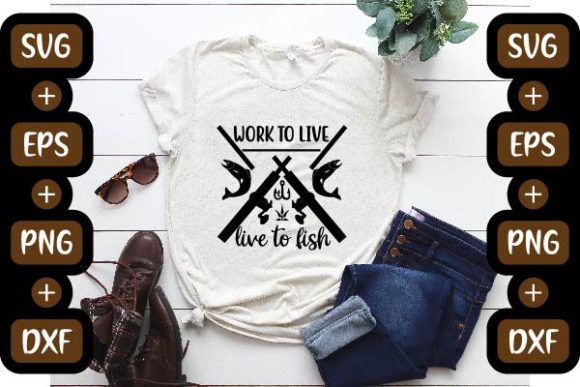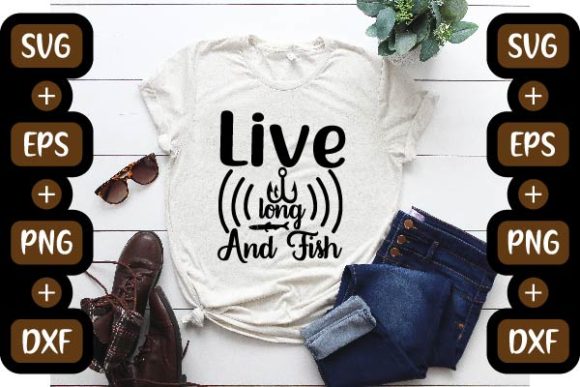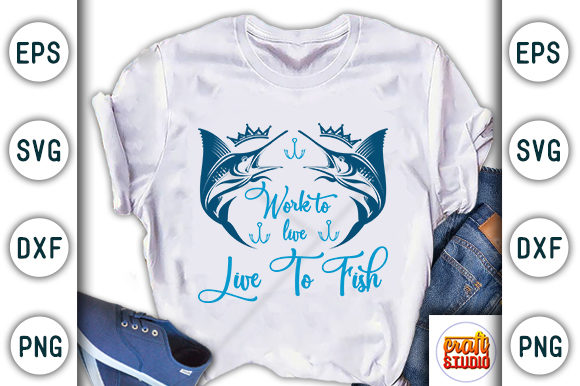
Work to Live Live to Fish
A Designer’s First Look: Clean, Confident, and Quietly Clever
When Work to Live Live to Fish opens on screen, it lands with calm authority—not flashy, not fussy, but unmistakably intentional. The phrase loops gently, almost like a breath: two balanced clauses, mirrored rhythm, no exclamation marks, no fish silhouettes or bait hooks cluttering the message. It’s typography-first, not clip-art-first. That’s rare in the T-Shirt Designs category—and immediately promising for embroidery.
Why This Feels Like an Embroidery-Ready Graphic (Not Just a Print)
As someone who’s stitched hundreds of quotes—from nursery names to brewery slogans—I notice right away that Work to Live Live to Fish avoids common embroidery pitfalls. No ultra-thin serifs. No overlapping letters. No tiny descenders that vanish under satin stitch. The spacing is generous, the weight consistent, and the height-to-width ratio sits comfortably within standard hoop limits for medium-sized apparel. I mentally place it on a natural linen tote bag—centered, 4.5 inches wide—and it reads cleanly from six feet away. That’s not luck. That’s design discipline.
Real Project Test: A Custom Sweatshirt for a Local Guide Service
Last week, I prepped Work to Live Live to Fish for a small-batch order: navy cotton-blend sweatshirts for a fly-fishing guide company. We used a 5×7 hoop, medium-weight cutaway stabilizer, and matte polyester thread in charcoal gray. The result? Crisp lettering, zero puckering, and a finish that looked professionally digitized—not traced from a vector. Customers commented on how “uncluttered” it felt compared to busier fishing-themed designs. That’s the quiet strength of Work to Live Live to Fish: it communicates identity without shouting. It belongs on gear meant to last seasons—not just one weekend.
Where It Shines (and Where to Pause)
- Custom apparel: Works beautifully on crewnecks, tees, and lightweight jackets—especially when centered or left-chest sized.
- Embroidered patch: Clean lines translate well to woven or chenille backing; no fine details to fray.
- Baby embroidery: Gentle rhythm and positive phrasing suit onesies and burp cloths—but avoid dense fill stitches on delicate interlock; opt for running-stitch outlines instead.
- Holiday or wedding gift: Paired with neutral fabric (cream tea towels, oatmeal pillow covers), it reads warm and personal—not kitschy.
- Small shop product: Stitches quickly, uses modest thread, and photographs well for Etsy listings or craft fair signage.
Use With Intention—Not Automatically
Work to Live Live to Fish isn’t magic dust. On thin jersey or stretchy performance fabric, stabilize aggressively—or consider heat-transfer vinyl instead of direct stitch. On dark fabric, test thread contrast first: light gray can disappear on charcoal unless you add a white underlay. And skip it for curved surfaces like caps unless you’re using a cap frame and have confirmed the file’s kerning holds at reduced scale. Tiny corners in the letterforms (like the tail of the g) may soften on textured fabrics like terry cloth or bouclé—so preview in a printable mockup with fabric texture overlays before committing.
What It Adds to Your Handmade Product—Beyond the Stitch
This isn’t just a machine embroidery design; it’s a subtle brand amplifier. When stitched onto a handmade apron for a fishing lodge café, it signals shared values—not just occupation. For an Etsy seller, it elevates perceived value: customers pay more for pieces that feel considered, not copied. And because it avoids trend-driven visuals (no retro fonts, no cartoon fish), it stays relevant across seasons—critical for a craft business building repeat buyers.
Practical Designer Notes Before You Stitch
- Always run a test on scrap fabric matching your final garment’s weight and stretch.
- Check stitch density in the file—if it’s heavy on fill stitch, reduce density slightly for breathable fabrics.
- Confirm hoop size compatibility: this design fits most 4×4 and larger hoops, but verify before hooping expensive material.
- Inspect small details at 200% zoom—especially where letters meet (e.g., the ve in “Live”). Ensure no unintended overlaps or gaps.
- Mock it up in black and white first. Does the hierarchy hold? Does “Fish” carry equal visual weight to “Work”?
- Try it on both light and dark backgrounds digitally—then reconfirm thread color choices in person.
- Use tear-away stabilizer for stable wovens; cutaway for knits or anything that will be washed often.
- If selling finished items commercially, review licensing terms in the ZIP file—this is a digital embroidery file, not public domain.
Final Thought: It’s Not About Fishing—It’s About Feeling Seen
I’ve passed on dozens of “fishing quote” graphics over the years because they scream hobby instead of heart. Work to Live Live to Fish does the opposite. It stitches quietly, reads clearly, and resonates deeply—whether you’re embroidering a retirement gift, a boutique apron, or your own favorite trucker cap. It doesn’t need embellishment. It doesn’t need explanation. It just needs good thread, steady hands, and the right fabric. That’s the mark of a truly functional embroidery project—one that becomes part of someone’s daily ritual, not just their closet.