Sorry I’m Only Talking to My Cat Today Graphics
As a brand designer and content marketer who’s helped over 200 small businesses refine their visual voice, I opened Sorry I’m Only Talking to My Cat Today expecting playful charm—and found something sharper: a tightly composed, emotionally resonant graphic design asset with surprising versatility. It landed in my inbox as part of a digital product bundle, and within minutes, I’d dropped it into a mockup for a client launching a “slow season” wellness offer—think soft launch emails, Instagram story highlights, and printable self-care checklists. The mood? Warm, wry, and unmistakably human. Not cutesy. Not ironic. Just quietly confident in its relatable honesty.
A First Impression That Builds Audience Trust
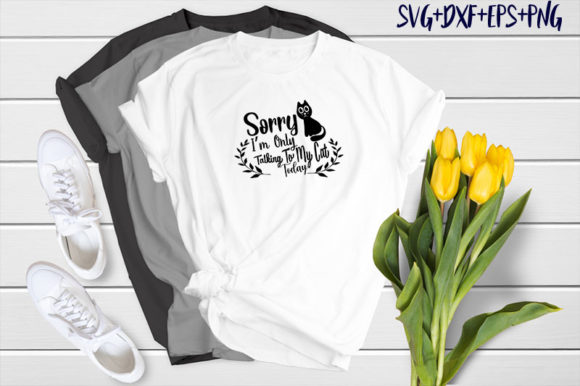
The illustration balances minimal line work with expressive typography—soft curves in the cat’s outline, gentle kerning in the phrase, and just enough negative space to breathe. It doesn’t scream. It leans in. That makes it ideal for lifestyle brands, online coaches, and creative entrepreneurs building audience trust through authenticity—not perfection. Unlike overdesigned clipart or generic stock illustrations, Sorry I’m Only Talking to My Cat Today feels handmade without sacrificing polish. It reads as modern design, not dated clipart—and that distinction matters when your audience scrolls past hundreds of marketing visuals daily.
Where This Graphic Design Asset Earns Its Keep
In real campaigns, this asset shines where personality meets purpose:
- Social media graphics: Perfect for Instagram carousels introducing new digital products—or Pinterest pins promoting printable designs. Its clean SVG and PNG formats scale crisply on mobile feeds.
- Email banners & lead magnets: Paired with a warm sans serif font and a muted brand accent, it adds emotional resonance to welcome sequences or content upgrades—without crowding the message.
- Branded templates: I embedded it into a Canva template kit for bloggers—used as corner accents on quote cards, headers for “behind-the-scenes” newsletters, and subtle watermarks on freebie PDFs.
- Packaging accents & merchandise: As a T-Shirt Designs element, it works beautifully on relaxed-fit tees, tote bags, and sticker sheets—especially for indie shops selling self-care kits or pet-friendly lifestyle goods.
- Editorial design & web design: It adds levity to blog headers or section dividers in long-form content—helping readers pause, smile, and stay engaged.
How It Strengthens Brand Identity—Without Overpowering It
This isn’t a logo design or a full brand identity system—but it *supports* one. When used intentionally, Sorry I’m Only Talking to My Cat Today reinforces visual consistency across touchpoints. In a recent rebrand for a paper crafting business, we used the SVG version as a recurring decorative motif: scaled down on packaging tape, mirrored in email footers, and animated subtly in a website hero banner. Because it’s delivered in vector (SVG, EPS, DXF) and high-res raster (PNG) formats, it holds up everywhere—from vinyl decals to digital ads—without pixelation or licensing ambiguity.
Marketing Goals It Helps Achieve—Practically
When aligned with strategy, this graphic design asset directly supports measurable outcomes:
- Stronger first impression: Its tone signals approachability—critical for service-based small business branding.
- Better product presentation: On mockups for digital products or printables, it adds narrative context without clutter.
- Improved audience trust: Humor rooted in shared experience (“yes, I talk to my cat too”) builds instant rapport.
- More memorable campaign visuals: It stands out in saturated spaces like Facebook ads or Etsy listings—not because it’s loud, but because it’s human.
Where to Use It Thoughtfully—Not Everywhere
This isn’t a universal solution. Avoid deploying Sorry I’m Only Talking to My Cat Today in contexts demanding formality: investor decks, legal disclaimers, B2B SaaS landing pages, or dense infographics. It competes poorly against small mobile text or low-contrast backgrounds. And if your brand voice is starkly minimalist—think monochrome luxury or clinical precision—it may dilute your visual hierarchy instead of enhancing it. Reserve it for moments where warmth, wit, or gentle rebellion serves your message—not distracts from it.
Brand Designer Notes You’ll Actually Use
Before finalizing any campaign, test this asset rigorously:
- Drop it into your actual brand color palette—does it sing with your primary and secondary hues, or mute them?
- Check black-and-white usage: Does the line weight hold up in grayscale print or embroidery?
- Preview it inside real campaign mockups—not just isolated previews. Does spacing feel balanced beside your headline fonts?
- Test readability at thumbnail size (e.g., Pinterest pin or email preview pane).
- Compare it side-by-side with top competitor visuals—does it stand out *for the right reasons*?
- Try pairing it with serif, sans serif, script, and display fonts. Which combo best reflects your brand’s personality?
- Confirm commercial license coverage—especially for client work, paid ads, or physical merchandise like T-Shirt Designs.
In short, Sorry I’m Only Talking to My Cat Today is more than a cute clipart file. It’s a flexible, emotionally intelligent piece of visual storytelling—one that earns its place in your design assets library when used with intention. For creative marketplace sellers, bloggers building content kits, or small business owners refreshing their marketing visuals, it’s proof that sometimes, the most effective branding isn’t about shouting louder—it’s about saying something true, in a voice people recognize as their own.