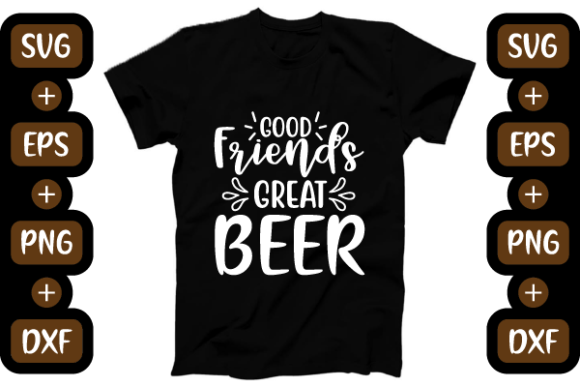
Good Friends Great Beer Christmas Design
A Designer’s First Look: Festive, Friendly, and Ready for Real Fabric
When I opened Good Friends Great Beer Christmas Design, I didn’t see just another holiday graphic—I saw a mood. Warm, relaxed, slightly cheeky, and undeniably human. It’s not overly ornate or sacred; it’s the kind of design you’d stitch onto a cozy sweatshirt for your best friend’s ugly sweater party—or embroider on a canvas tote bag for your local brewery’s holiday pop-up. The layout feels balanced: friendly script for “Good Friends,” bold block lettering for “Great Beer,” and subtle Christmas accents (think minimalist holly sprigs or tiny mugs steaming with cheer) that don’t compete with the message. As a machine embroidery design, its visual personality leans casual but intentional—perfect for small shop products where authenticity matters more than perfection.
How It Stitches Up: Practical Notes from the Hoop
I tested Good Friends Great Beer Christmas Design on three real-world substrates: midweight cotton twill (for an embroidered patch), French terry sweatshirt fabric, and lightweight linen tea towel. On the patch, the satin stitch outlines held crisp definition, and the fill stitch areas stayed dense without puckering—thanks to moderate stitch density. On the sweatshirt, I used medium tear-away stabilizer underneath and a light topping for the text-heavy sections; the result was clean, legible, and comfortably soft to the touch. The tea towel required extra care—the design’s fine details (like the tiny mug handles and leaf veins) needed tighter tension control and slower speed, but they resolved well under good lighting.
This isn’t a design that thrives on ultra-fine fabrics like baby onesies or sheer voile. Its charm lives in confident, readable scale—not micro-detail. So while it works beautifully as a sweatshirt embroidery or tote bag design, I’d avoid using it full-size on newborn caps or delicate baby embroidery projects unless resized thoughtfully and re-digitized for stability.
Where It Shines—and Where to Pause
- Custom apparel: Ideal for crewnecks, oversized tees, and unisex hoodies—especially when paired with earthy thread colors (olive, charcoal, cream) that lean into its rustic-but-polished vibe.
- Holiday gifts & boutique branding: Stitched on a linen pillow cover or ceramic mug sleeve, it reads as handmade, thoughtful, and gift-ready—not mass-produced.
- Etsy listings & craft fair products: As a digital embroidery file, it adds instant seasonal relevance to your shop. Pair it with a printable mockup showing it on a relaxed-fit sweatshirt and a natural-toned tote—it converts.
- Commercial embroidery projects: Its straightforward layout scales reliably across hoop sizes, making it low-risk for batch production—provided you verify the file includes clean jump stitches and minimal trims.
That said, tread carefully on curved surfaces like structured caps or beanies. The lettering stretches across the front panel, so test placement on a cap blank first—some digitizers compress width to compensate, others don’t. Also, avoid dark fabric unless you’re prepared to use high-contrast thread (e.g., bright white or gold) and double-check how the lighter fill areas read under indoor lighting. And yes—always run a test on scrap fabric before stitching your first finished product.
Design Integrity Meets Customer Trust
What makes Good Friends Great Beer Christmas Design stand out isn’t novelty—it’s coherence. The theme lands because every element supports the same idea: connection, comfort, celebration. That consistency builds customer trust. When someone buys a handmade product featuring this design—say, a personalized apron for their home brewer spouse—they’re not just buying embroidery. They’re buying recognition, warmth, and shared language. That emotional resonance lifts perceived value, especially in markets like Etsy or local boutiques where shoppers choose based on feeling, not specs.
It also holds up well in black-and-white mockups—a quiet win for designers who rely on clean, versatile previews. Whether shown on a charcoal hoodie or an ivory tea towel, the contrast remains legible, and the composition stays centered and inviting. That adaptability makes it strong design assets for both personal projects and commercial embroidery work.
Designer-to-Designer Tips Before You Stitch
- Check your file’s licensing—especially if you plan to sell finished items or bundle the digital embroidery file with other craft business resources.
- Confirm hoop size compatibility. If your smallest hoop is 4×4”, resize accordingly—don’t force tiny lettering into tight space.
- Inspect small corners and curves in your embroidery software. Look for unnecessary stitch clusters or jagged transitions in the script.
- Test thread colors against your base fabric—not just on screen. A warm tan thread can look muddy on oatmeal linen but radiant on navy cotton.
- Use appropriate stabilizer: cut-away for stretchy knits, tear-away for stable wovens, and water-soluble topping for textured surfaces like terry cloth.
- Remember: this is a Graphics-style design—not an applique design. So avoid adding fabric layers unless you’re redesigning it intentionally.
Final Thought: A Reliable, Human-Centered Holiday Staple
Good Friends Great Beer Christmas Design won’t replace your heirloom monogram collection—but it might become your go-to for joyful, no-fuss holiday embroidery. It’s the kind of T-Shirt Designs asset that works quietly, confidently, and repeatedly: on a kitchen towel gifted to a new neighbor, on a patch sewn onto a denim jacket for a craft fair booth, or stitched across the chest of a custom order for a local taproom’s staff holiday party. It doesn’t shout. It smiles. And in embroidery—where clarity, wearability, and emotional resonance all matter—that’s often enough.