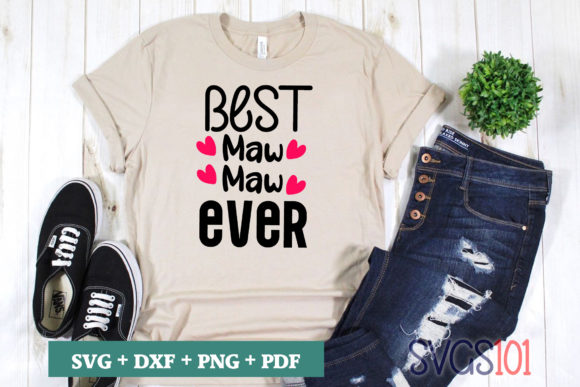
Best Maw Maw Ever SVG
A Warm, Handmade Vibe—With Real Embroidery Considerations
First glance at the Best Maw Maw Ever SVG lands like a hug: soft curves, friendly script, and that unmistakable Southern charm. It’s not flashy—it’s heartfelt. As a designer who’s stitched hundreds of personalized gifts for grandparents, baby showers, and boutique shelves, I immediately pictured this on a cream-colored linen tote bag, hand-stitched with buttery-soft cotton thread. But before cutting fabric or loading a hoop, I asked myself: does this design translate cleanly from screen to stitch? And more importantly—does it hold up when someone actually wears, washes, or gifts it?
Where This Design Truly Shines
The Best Maw Maw Ever SVG lives best in projects where warmth and authenticity matter more than precision-perfect geometry. Think embroidered sweatshirt pockets, kitchen towels for a new grandma, baby onesies (with gentle stabilizer), or small woven patches sewn onto denim jackets. Its open letterforms and modest height—no tight serifs or ultra-thin strokes—make it forgiving on medium-weight fabrics like cotton twill, brushed poly-cotton blends, and stable quilting cotton.
- Custom apparel: Works beautifully centered on the chest of a crewneck sweatshirt—especially when paired with a simple satin-stitched heart or floral accent nearby.
- Tote bag design: Holds clarity even at 3.5–4 inches wide; avoids overcrowding the canvas while still feeling intentional and personal.
- Baby embroidery: Gentle scale and rounded edges suit onesies and burp cloths—just avoid placing near seams or elastic where puckering could distort the text.
- Holiday embroidery: A natural fit for Mother’s Day bundles, Easter brunch napkins, or Christmas stockings—especially when stitched in ecru or sage green thread for quiet elegance.
Where Caution Is Needed
This isn’t a design built for high-detail technical execution—and that’s okay. But as an embroidery designer, I know where it needs thoughtful handling:
- Small hoop sizes: Below 4 inches wide, the letter spacing starts to feel cramped. Avoid shrinking it into a 3-inch hoop unless you’re willing to manually adjust kerning in your embroidery software.
- Textured or stretchy fabric: On terry cloth towels or ribbed knit caps, the script can blur if stabilizer isn’t layered correctly. Use cutaway + tear-away combo for best definition.
- Dark fabric: The design relies on shape and rhythm—not heavy contrast. Test thread colors carefully: navy on black fades; mustard on charcoal pops but may read as “vintage” rather than “sweet.”
- Curved surfaces: Skip this one for baseball caps unless you’re using a cap frame and have tested stitch density thoroughly. The flow of the letters doesn’t adapt well to severe curvature without distortion.
What It Adds to Your Finished Product
Used well, the Best Maw Maw Ever SVG elevates perceived value—not through complexity, but through emotional resonance. Customers don’t buy “a script font.” They buy a keepsake. That means stitching clarity directly impacts trust: if letters bleed, overlap, or lose their gentle bounce, the handmade product feels rushed—not cherished. I’ve seen Etsy sellers boost repeat orders simply by ensuring this kind of sentiment-driven design stays crisp and legible across fabric types.
It also supports brand consistency for small shops focused on intergenerational gifting—think curated nursery lines, Southern-themed boutiques, or craft fair vendors building loyal followings. When stitched cleanly, it reads as professional *and* personal—a rare balance in T-Shirt Designs and Graphics meant for real people, not stock mockups.
Practical Designer Notes Before You Stitch
- Always test on scrap fabric first—same type, same stabilizer, same thread count as your final project.
- Check thread color contrast in natural light *and* under indoor lighting. What reads clearly on screen may vanish on oatmeal linen.
- Review stitch density in your embroidery software. Overly dense fills in the descenders (like the tail of the “g” or “y”) can cause stiffness or shadowing on lightweight fabrics.
- Confirm hoop size compatibility—this is a graphics-based file, not pre-digitized embroidery. You’ll need to convert it properly for your machine. Don’t assume auto-digitizing will preserve its personality.
- Inspect small details at 200% zoom: look for unintended overlaps, stray nodes, or inconsistent line weights that could create stitch errors.
- Test black-and-white mockups to assess readability on both light and dark backgrounds—especially important if you plan to list it on Etsy or offer digital embroidery files.
- Use proper stabilizer—especially for baby items or frequently washed kitchen textiles. A lightweight cutaway prevents ghosting after five washes.
- Verify licensing before selling finished products or reselling the file. Since the product description lists SVG, DXF, and PNG formats, confirm whether commercial use is permitted for your intended application.
Final Thought: It’s Not Just a File—It’s a Moment
The Best Maw Maw Ever SVG succeeds because it doesn’t try to be everything. It’s narrow in scope—but deep in intention. For craft business owners, Etsy sellers, and makers who understand that the most meaningful embroidery isn’t about technical perfection, it’s about resonance. When stitched with care on the right fabric, in the right size, with the right stabilizer, it becomes more than a graphic—it becomes a quiet affirmation. And that’s exactly what makes it worth keeping in your design assets rotation.